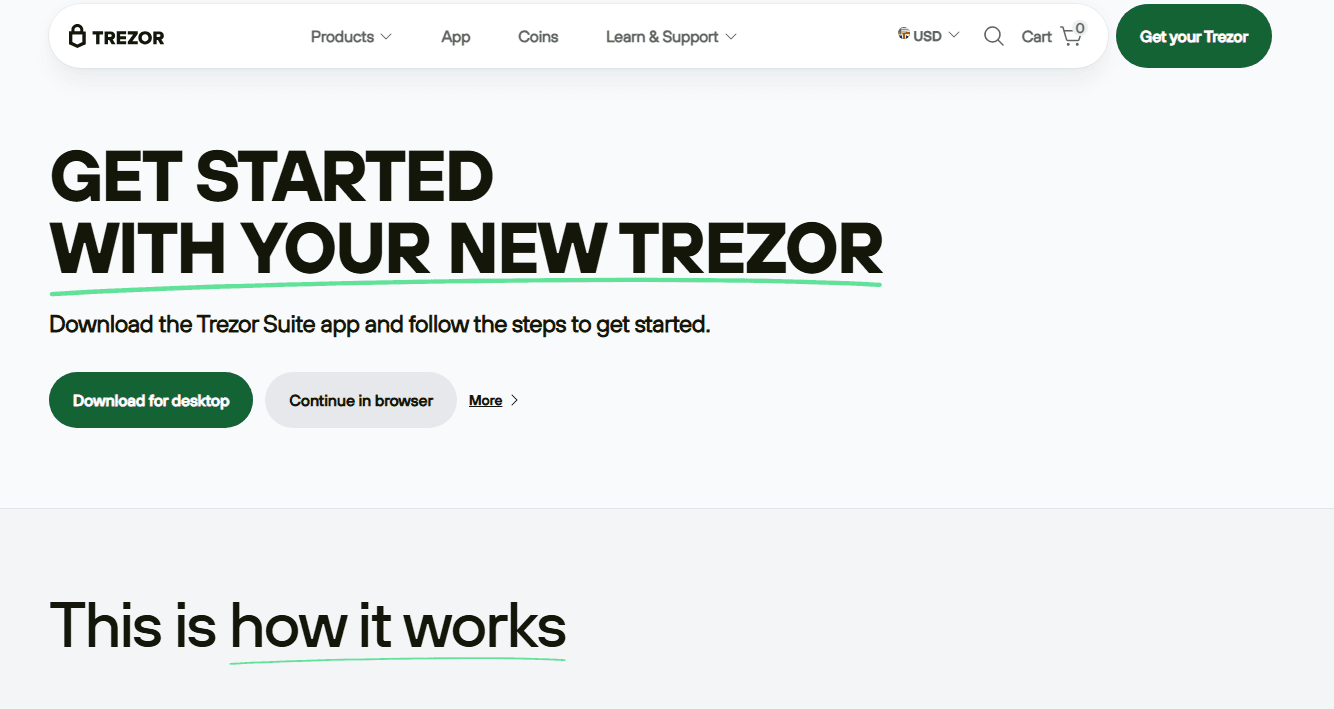
Trezor Suite: A Complete 1200-Word Guide
Trezor Suite is the official software application designed to work alongside Trezor hardware wallets, providing users with a secure and intuitive way to manage their digital assets. Instead of forcing people to navigate multiple platforms or websites, Trezor Suite brings everything together in one organized environment. It focuses on ease of use, strong privacy, and complete user control. This guide explains what Trezor Suite is, how it works, and why many people prefer it for managing their cryptocurrency holdings.
Understanding Trezor Suite
Trezor Suite acts as a command center for your Trezor hardware wallet. While the hardware wallet itself protects your private keys, Trezor Suite provides the interface for managing accounts, checking balances, updating the device, and performing everyday tasks. The two work together as a secure system: the hardware wallet stores sensitive information offline, and Trezor Suite displays the information you need without ever exposing private details.
What makes Trezor Suite different from ordinary wallet apps is its security philosophy. It does not store recovery phrases, private keys, or sensitive secrets on your computer. These always remain inside the hardware wallet. Trezor Suite simply acts as a bridge, showing your accounts and allowing actions only when confirmed on the physical device.
A Clean and Organized Interface
One of the first things people notice about Trezor Suite is its layout. The interface is built for clarity, making it easy for beginners while still offering advanced features for experienced users. The major sections often include:
Dashboard
The dashboard displays a quick summary of your assets, total portfolio value, and recent activity. It is designed to provide an instant overview without overwhelming you with details.
Accounts
Each asset or network supported by Trezor gets its own account area. Within these account pages, you can view your transaction history, check balances, and manage token lists. Trezor Suite groups assets neatly so you can move between them without confusion.
Send and Receive
These tabs allow users to perform basic actions. When receiving assets, the suite displays an address that must be confirmed on the hardware wallet. When sending assets, the suite prepares the transaction but requires you to verify the details physically on your device.
Settings
The settings area includes customization tools, privacy options, display preferences, and security configurations. Users can adjust Trezor Suite’s appearance, change language settings, or explore advanced features depending on their comfort level.
Deep Integration With Trezor Devices
Trezor Suite works closely with the Trezor Model One and Trezor Model T hardware wallets. This integration allows the suite to:
Check firmware updates
Install new coin support
Manage security features
Verify addresses directly on the device
Because the hardware wallet and software interface communicate closely, the user always maintains full control over actions that involve sensitive data. Trezor Suite never performs key-related operations without the device’s approval.
This design prevents unauthorized transactions. Even if malware affects the computer, the hardware wallet acts as a barrier. Unless the user physically confirms an action, nothing can be executed.
Security at the Core
The security structure behind Trezor Suite is one of its defining features. Some of the core principles include:
Local-Only Privacy
Trezor Suite emphasizes local data handling. It does not require cloud storage, online accounts, or remote backups. This reduces the risk of sensitive information being accessed or leaked.
Device-Based Verification
All important operations—such as sending funds or displaying a receiving address—must be confirmed on the hardware wallet’s screen. This ensures information cannot be manipulated on the computer.
Open-Source Transparency
Trezor Suite, like Trezor’s hardware and firmware, is open source. This means the code can be reviewed by researchers and community experts, improving trust and accountability.
Password Manager and Additional Tools
Some versions of the app may integrate optional features like password management. These tools use the hardware wallet’s security to encrypt stored passwords or sensitive data.
Managing Digital Assets in Trezor Suite
Trezor Suite supports a variety of cryptocurrencies, including major networks and popular tokens. The exact number of supported assets may vary depending on the device model and firmware updates, but the suite is continually evolving to include more networks.
Account Management
When a user adds an account, the suite communicates with the hardware wallet to display balances based on blockchain data. It does not store or create private keys itself. All key generation and signing actions remain on the device.
Token Detection
For networks like Ethereum, Trezor Suite can automatically scan and display supported tokens. This makes it easier to track holdings without relying on third-party tools.
Transaction History
Each account includes a detailed history so users can clearly track incoming and outgoing transfers. The suite organizes information chronologically, making it easy to review activity.
Sending and Receiving With Confidence
Sending and receiving digital assets is made deliberately secure:
Receiving
To receive assets, Trezor Suite shows a receiving address. The user must confirm the address on the hardware device to ensure it matches perfectly. This prevents situations where malicious software might display a false address.
Sending
When preparing a transaction, Trezor Suite calculates network fees and provides a preview. The hardware wallet then displays the transaction details. The user must approve it physically before it is broadcast to the blockchain.
This approval process acts as the final safeguard.
Portfolio Overview and Insight Tools
Trezor Suite provides tools to help users understand their assets better. The portfolio section often includes:
Value charts
Historical performance
Asset allocation views
Recent activities
These insights do not act as financial advice but simply present your holdings in a clear and informative way.
Customization Options
Trezor Suite includes several customization features so users can tailor their experience:
Theme switching
Language selection
Enhanced privacy mode
Optional pin or password protection
Device-specific preferences
These options allow users to create an interface that feels comfortable and personalized.
Firmware and Software Updates
Trezor Suite plays a major role in keeping your hardware wallet secure and up to date. Firmware updates can add features such as:
New coin support
Improved performance
Better user experience
Security improvements
The update process is guided step-by-step by the suite to ensure safety and clarity.
Privacy Features
Privacy is a large part of Trezor Suite’s design philosophy. Many features exist to reduce surveillance and protect user activity. These may include:
Local transaction signing
Address verification
Avoiding unnecessary data sharing
Optional privacy settings
Secure bridge communication
These tools help ensure users’ information remains their own.
Why People Choose Trezor Suite
Many individuals prefer Trezor Suite for reasons such as:
Secure integration with hardware wallets
Clear and intuitive interface
Strong focus on privacy
Reliable account organization
Compatibility with multiple networks
Open-source transparency
Consistent updates
It brings together security, usability, and clarity in a single application.
Conclusion
Trezor Suite is more than a simple wallet interface. It is a polished, secure, and user-centered application designed to give people full control over their digital assets. By pairing seamlessly with Trezor hardware wallets, it creates an environment where sensitive data stays offline and protected, while everyday tasks remain simple and convenient.
Whether someone wants to manage a diverse portfolio, track activity, update their device, or explore network features, Trezor Suite provides a balanced and trustworthy platform. It continues to evolve and remains one of the most recognized tools for securely managing digital assets.